
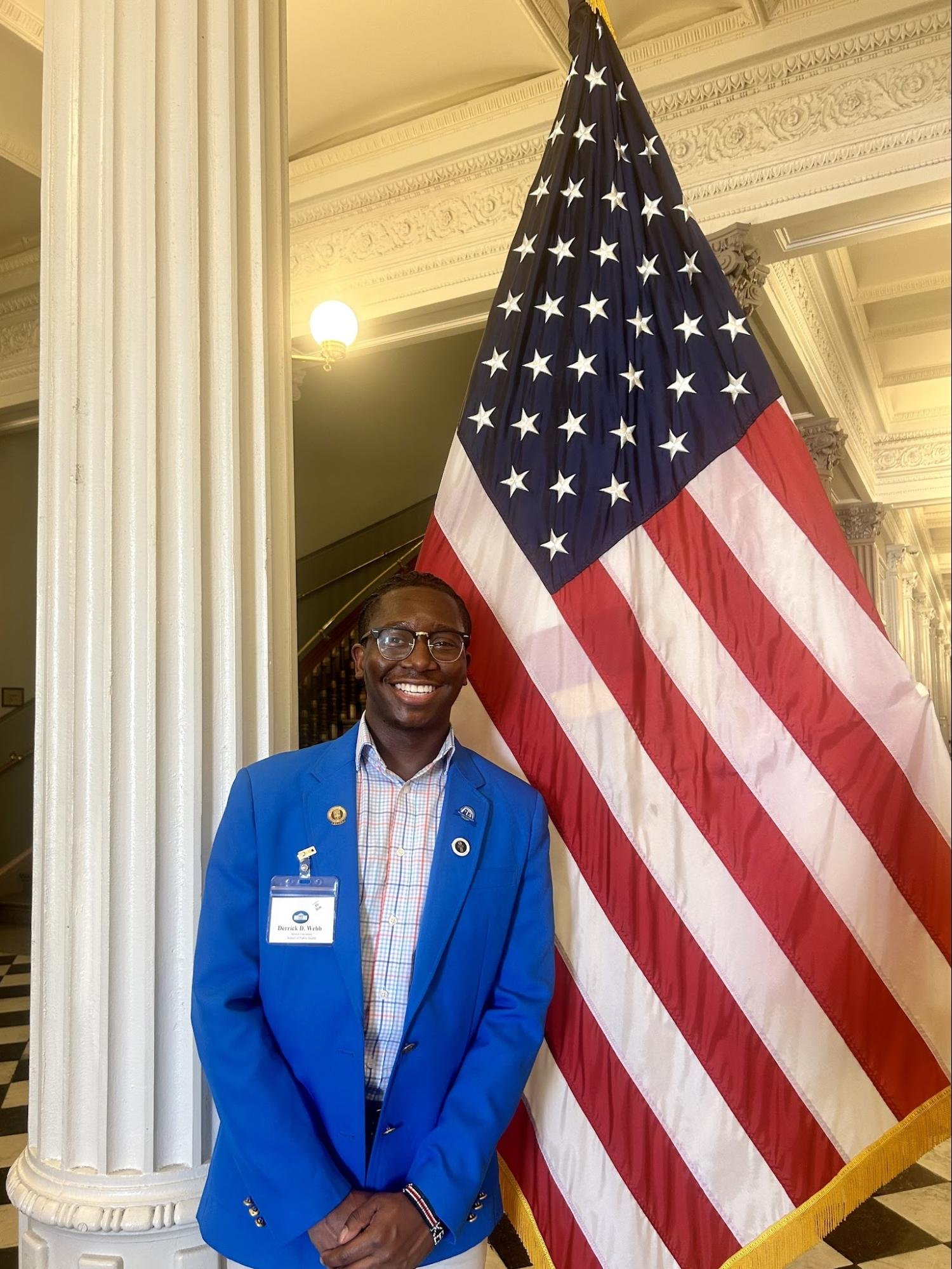
Medicaid covered Derrick from childhood through college. He wants more Alabamians to have that support.
By Whit Sides, Cover Alabama storyteller, Alabama Arise
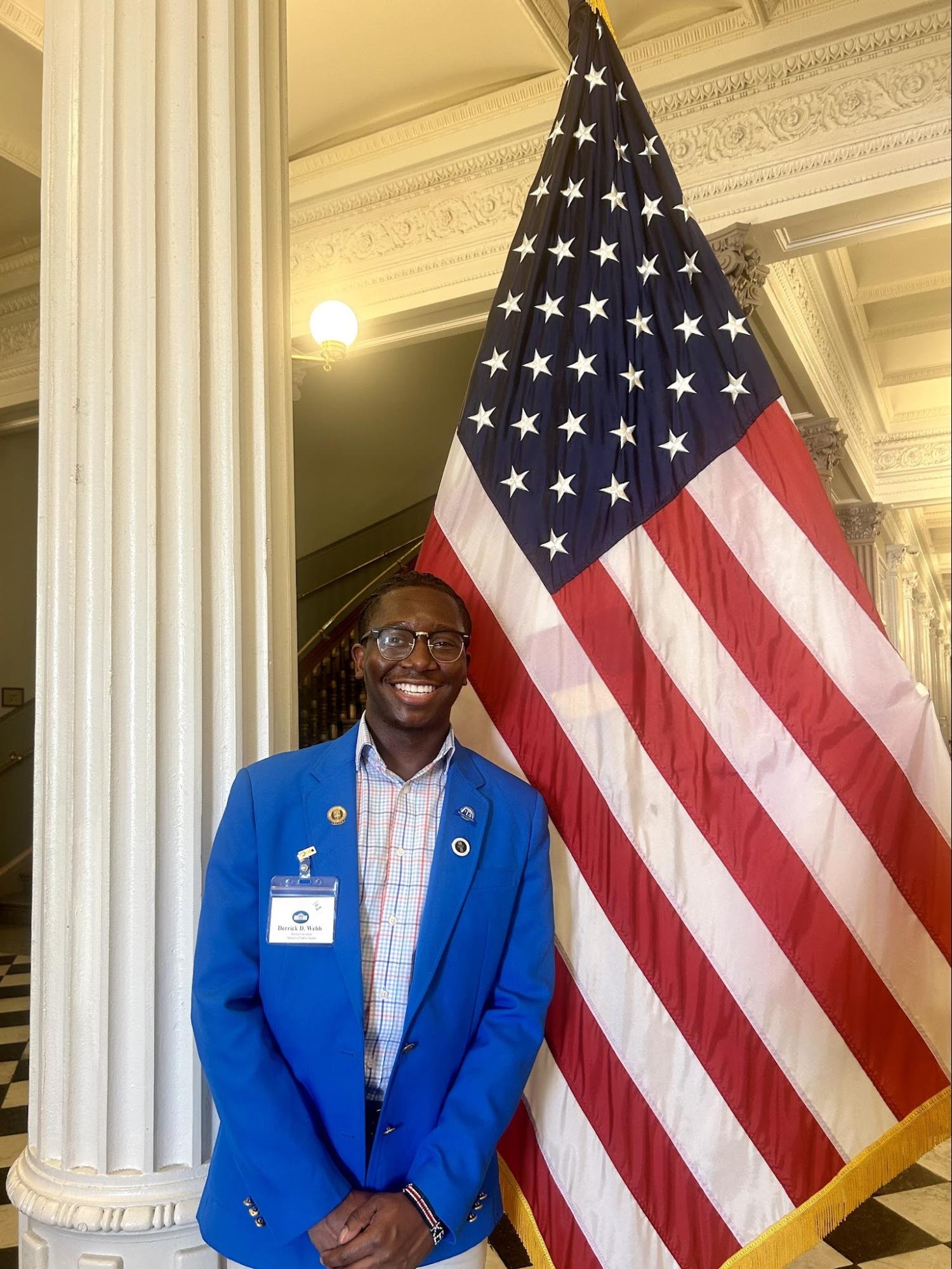
Derrick Webb visits the White House during a trip to Washington, D.C., in summer 2024. Alabama Medicaid covered Derrick’s medical expenses when he was a child. Now he advocates for Medicaid expansion and other resources to ensure Alabamians with diabetes can get the healthcare they need. (Courtesy of Derrick Webb)
For most of Derrick Webb’s life, Medicaid was how he went to the doctor.
Medicaid covered him as a child growing up in Montgomery, when his family traveled to Birmingham to treat his severe asthma.
“It’s gotten so much better over the years, but I lived in and out of Children’s Hospital,” he said.
It covered him when he left Alabama for college in New Orleans. And it covered him through graduate school in Rhode Island, where he studied global public health.
Over those years, Medicaid paid for every surgery and hospital visit. It gave Derrick access to specialists while he managed school expenses and academic demands. He could seek treatment without first figuring out how his family would pay for it.
That changed when he returned to Montgomery last year at age 24. He said he no longer qualified for Medicaid in Alabama. After years of using the program, he had to learn how to buy health insurance for the first time.
His lifelong experience with Medicaid — and the difficulty of replacing it — now drives his advocacy for expansion in his home state.
“I’m a fierce advocate for expanding Medicaid,” he said. “Because I’ve benefited from the resources and the power of Medicaid expansion.”
Growing up with Medicaid coverage
As a kid, Derrick’s family had Alabama Medicaid. Having coverage mattered, even when getting to a provider required time and travel.
When he left Montgomery at 18 to attend Dillard University in New Orleans in 2019, he was able to receive Medicaid in Louisiana and remained covered throughout his four years there.
During college, pain near the site of an earlier operation led him to his primary care doctor. After an ultrasound, he was referred to a surgeon for a hernia repair.
The surgeon asked when he wanted to schedule it. Derrick wanted to finish his exams first, so they settled on March. Medicaid covered the surgery, and his family paid nothing out of pocket.
He also was hospitalized twice during undergraduate school. Through both stays, figuring out how to pay for care was a worry he did not have.
Derrick said Medicaid gave him a sense of comfort and ease that he wishes every young person in Alabama had.
Help with groceries made a difference, too. When he applied for Medicaid, he was encouraged to apply for food assistance through the Supplemental Nutrition Assistance Program (SNAP), also known as food stamps. He submitted documentation of his work-study participation and was approved.
Derrick said he remembers receiving roughly $200 to $250 a month, with additional assistance during the pandemic.
“It was such a significant help,” he said.
A healthcare lifeline through graduate school
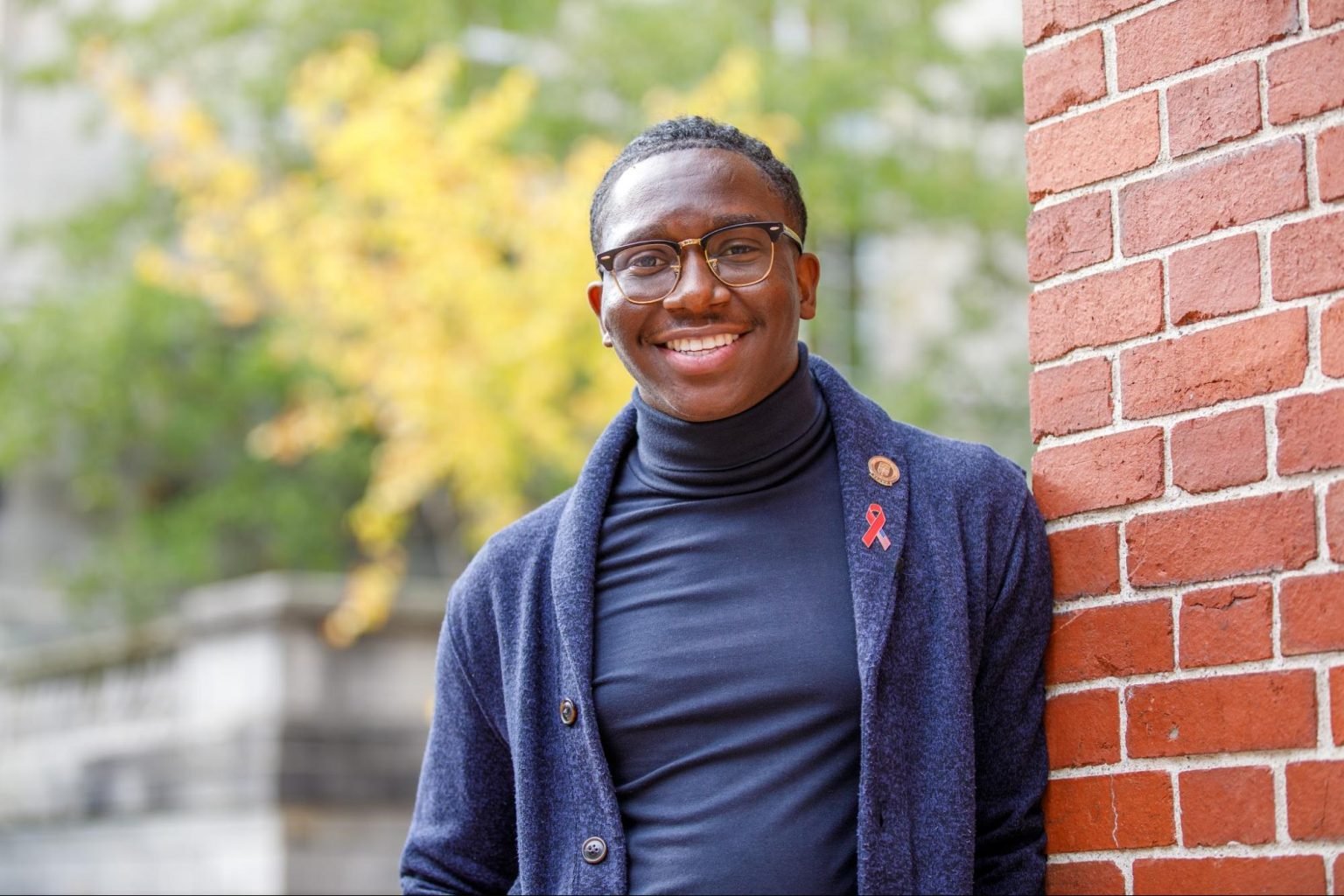
Derrick Webb smiles on the campus of Brown University in Providence, R.I., in fall 2024, during his time as a student there. Medicaid coverage in Rhode Island allowed Derrick to afford the healthcare he needed while he obtained his master’s degree. (Courtesy of Derrick Webb)
After graduating from Dillard with a biochemistry degree in 2023, Derrick moved to Rhode Island for graduate school at Brown University, an Ivy League institution in Providence, R.I. His study program focused on global health.
Brown required all students to have health insurance, he said. The school offered its own private plan, but Derrick said it was expensive. He had never paid for insurance before, so the process was intimidating.
That’s when he decided to apply for Rhode Island Medicaid. The state approved him, and he used that coverage to waive Brown’s insurance plan.
Derrick said Medicaid allowed him to see the specialists he needed, and his coverage even offered transportation to appointments. Once, at a Monday consultation, he learned he could return for a procedure as soon as that Thursday. Being able to get care right when issues arose made a tough situation easier while he focused on his studies and managed the costs of school, he said.
When Derrick needed a root canal, he said, his plan covered the crown but not the procedure itself. After he applied for assistance, his college provided funding for the remaining expense. Between the coverage and the university’s assistance, he did not have to pay out of pocket.
“Having an experience like I did, it makes me think of what things could be like in our state,” he said.
Louisiana and Rhode Island have expanded Medicaid to cover more adults with low incomes. Alabama remains one of 10 states that have not adopted expansion.
Coming home meant starting over on health coverage
Returning to Alabama meant Derrick had to find coverage for the first time on his own. He was navigating unfamiliar insurance plans and fielding calls from companies offering coverage.
Derrick enrolled in one product believing it was health insurance. But he later learned it was just a discount plan that offered discounts on certain services that clinics could choose to accept.
He eventually chose a Blue Cross Blue Shield medical plan for $63.50 a month. Vision and dental coverage were separate, another distinction he had to learn after years of using Medicaid.
“It was overwhelming because I was 24 at the time when I moved back to Alabama navigating all of this,” he said.
Derrick said his education helped him understand the healthcare system and advocate for himself. But he said he worries about other young adults trying to find coverage without that background.
After earning his master’s degree from Brown, Derrick now works with the American Diabetes Association, which offers employer-sponsored insurance. Even with coverage, he said, getting an appointment still can be inconvenient.
Derrick has some doctors who practice at Jackson Hospital, a Montgomery hospital that was at risk of closure this year before securing funding needed to remain open. Recently, he said, he waited almost three months for a gastroenterology follow-up. But he said he hasn’t made the leap to looking for specialists in another city or traveling for care yet.
Derrick said he hopes Medicaid expansion could help Alabama attract and retain more valuable specialists for folks like him facing chronic illness.
‘Yes, we deserve this in Alabama’
At the American Diabetes Association, Derrick works on initiatives that provide funding and support for public health departments serving people with type 1, type 2 and gestational diabetes.
“I’ve always tried my best to keep Alabama at the forefront,” he said.
Derrick said his goal since starting his new advocacy role has been to connect people to national resources that can support communities in Alabama. He said our state leaves many valuable resources, including Medicaid expansion, on the table while other states enjoy the benefits.
“More people having access to coverage is a good thing. How can we get this to happen?” he said.
Medicaid expansion can be a lifesaver for Alabama, Derrick said, especially given the state’s relative lack of healthcare infrastructure compared to other places he has lived.
Alabama’s need for affordable health coverage is growing. Congress allowed enhanced Premium Tax Credits for Marketplace plans under the Affordable Care Act to expire at the end of 2025. By September 2026, almost 95,000 Alabamians had lost Marketplace coverage following that expiration.
For Derrick, the consequences of lawmakers’ decisions are measured in the care that people can receive throughout their lives.
Medicaid was there when his mother took him to doctor’s appointments. It was there when he needed surgery in college and when he pursued graduate school. Derrick wants Alabama to extend that support to more adults — and he is working to help make it happen.
“I’m very passionate about this,” he said. “I want people to know that yes, we deserve this in Alabama. We just aren’t getting it.”
About Alabama Arise and Cover Alabama
Whit Sides is the Cover Alabama storyteller for Alabama Arise, a statewide, member-led organization advancing public policies to improve the lives of Alabamians who are marginalized by poverty. Arise’s membership includes faith-based, community, nonprofit and civic groups, grassroots leaders and individuals from across Alabama. Email: whit@alarise.org.
Arise is a founding member of the Cover Alabama coalition. Cover Alabama is a nonpartisan alliance of advocacy groups, businesses, community organizations, consumer groups, health care providers and religious congregations advocating for Alabama to provide quality, affordable health coverage to its residents and implement a sustainable health care system.
Stories help to put a human face on the health care policy issues. By sharing your story, you help speak for people who may be facing issues just like yours.